You know that feeling.
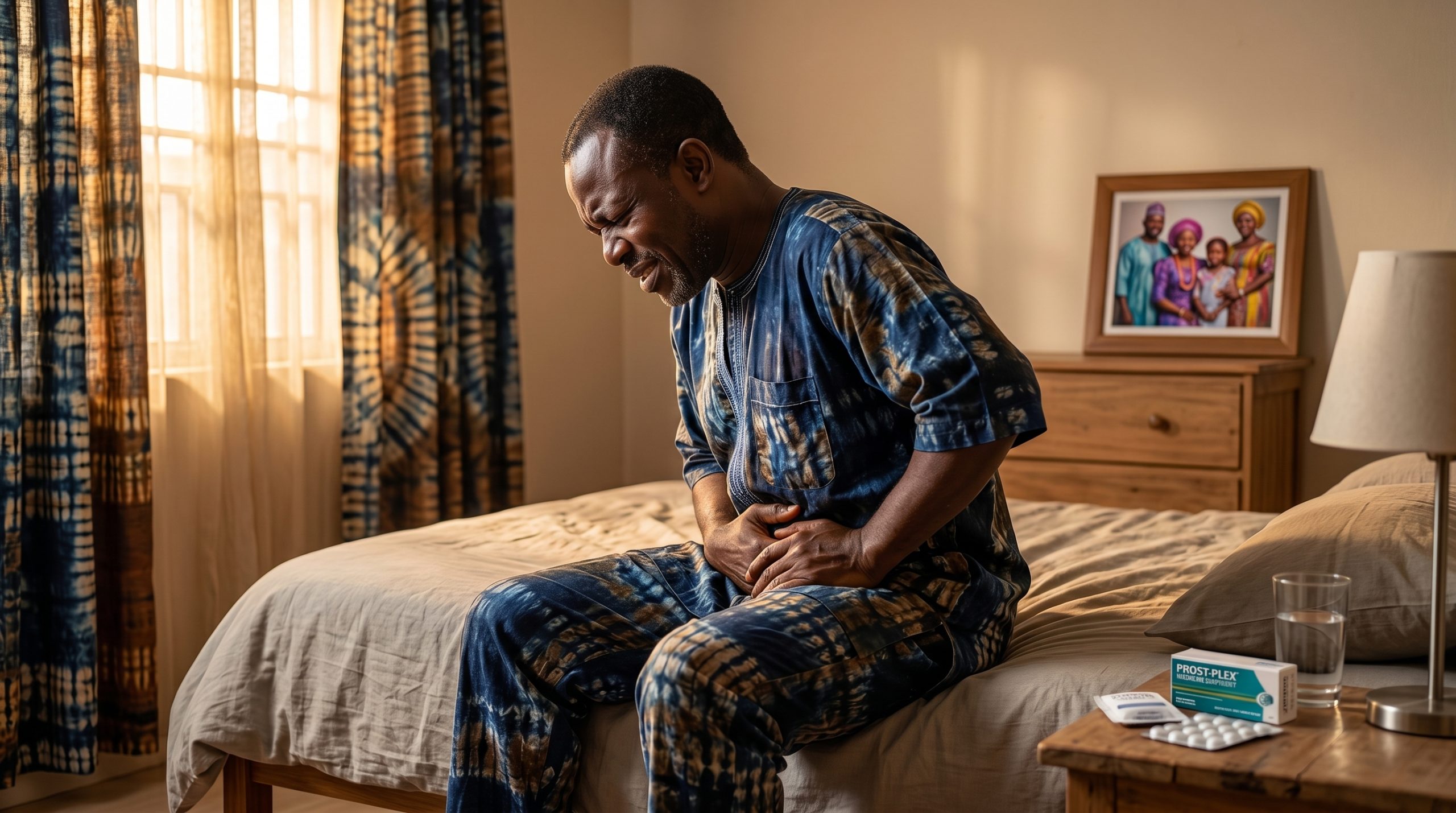
It is 1am. You were just deep asleep — the kind of sleep you have been chasing for months. And then it comes. That pressure. That urgency. That familiar pull that gives you no choice.
You get up quietly.
You move carefully so your wife does not hear. You go to the bathroom. You stand there. The flow comes slowly — weak, hesitant, like it is afraid to come out. You finish. You go back to bed.
Maybe that is the last time tonight. Please let that be the last time.
But you know it will not be.
At 3am it happens again. You tell yourself it is the water you drank. You shuffle back to the bathroom. The flow starts. Stops. Starts again. You wait. You shake your head in the dark.
At 5am — again.
By the time morning comes, you are already exhausted. You sit at the breakfast table, you answer questions, you respond to your children — and inside you are running on nothing. Just empty. Just tired in a way that sleep no longer fixes.
And the worst part?
You cannot tell anyone.
How do you explain to a man — a Nigerian man — that he cannot sleep properly because of his bladder? That he is afraid to drink water after 6pm because of what the night holds?
Your wife has noticed something is different. You have not explained it. Maybe you have told her you are just stressed. Maybe you have said nothing at all. But she has noticed the tiredness in your eyes. She has noticed other things too — things you have not been able to talk about even in private.
You have heard the word prostate. It frightens you in a way that few things do. You went to see a doctor once — or you thought about it — and then you stopped. Because what if they tell you something you are not ready to hear? And even if they do, can you afford what comes next?
The consultations. The tests. The specialist. The drugs with their long names and their longer list of side effects that sometimes make things worse before they make them better.
So you carry it. You carry it quietly, in the dark, between 1am and 5am — while your family sleeps peacefully around you. You pretend everything is fine when you go out. You perform strength when you are running on empty.
How much longer can you keep doing this?
Maybe you have tried things. Maybe you visited a pharmacy and bought something that gave you temporary relief but never really solved it. Maybe a friend gave you advice about what to eat and what to avoid — and the advice contradicted another friend's advice — and you tried both and nothing changed.
Maybe you even tried a herbal mixture from a man at the roadside. You do not know what was in it. You followed his instructions for two weeks. Nothing happened.
I know. I hear you. I understand every single thing you just read — because what I just described is not research. It is what I have seen with my own eyes, in my own community, in men I know and respect.
And today I want to tell you something that is going to change the way you think about all of this.
Drop everything you are doing now and listen to every word I am about to say.
Our Ibibio grandfathers did not suffer from this.
Not because they were different men. Not because they had better hospitals — they had none. But because they ate from the land in a way we have forgotten. They drank herbs that grew in their compounds. They used plants that our grandmothers knew by name, by season, by preparation — remedies passed down through four generations without ever being written in a book.
That knowledge did not disappear. It was simply buried under the noise of modern life. Under the pharmacies and the hospitals and the imported supplements that cost more than most Nigerian men earn in a week.
Until someone reminded me where to look.
My name is Bi-Chally. First thing you should know about me is that I am NOT a doctor. I am not a nutritionist or a pharmacist or any kind of certified health professional.
I am a 37-year-old computer technician from Akwa Ibom State. Married. Father of three. Self-employed. Running my own repair business and trying — like most Nigerian men — to hold everything together without letting anyone see how much the holding costs.
I speak Ibibio and Efik. My roots are deep in this soil. And the most important health lesson I have ever learned did not come from a hospital or a medical textbook.
It came from an old woman at a funeral gathering in the village — sitting quietly in the shade, watching a man she had known since he was a child — suffering in a way he had been too proud to name.
It started the way it always starts for Nigerian men. Slowly. Quietly. So gradually that you almost convince yourself it is normal.
I began noticing it about three years ago. I would wake up once in the night — sometimes twice — and I told myself it was the heat, or the water I had with dinner, or the stress of managing my business. Men always have reasons. We are very good at reasons.
But the reasons ran out around the time the trips to the bathroom became three. Then four.
My wife, Blessing, noticed before I admitted it to myself. She would look at me across the breakfast table with that quiet, careful look — the one she uses when she is worried but does not want to start an argument.
"You were up again last night," she said one morning, setting a plate in front of me.
"I couldn't sleep," I said.
She did not reply. But we both knew it was more than that.
The tiredness was becoming a problem I could no longer hide. In my repair shop, I would sit at the workbench with a motherboard in front of me and realise that twenty minutes had passed and I had not moved. My concentration was disappearing. My patience with customers — never a long rope to begin with — was getting shorter.
And there were other things. Things between Blessing and me that I do not need to describe in detail for you to understand. Things that a husband and wife notice. Things that the nighttime holds.
My confidence was going somewhere I could not follow it.
The breaking point came on a Thursday morning — I remember because it was market day and the noise outside was already at full volume at 7am. Blessing had asked me a simple question the night before, and I had snapped at her in a way that I immediately regretted but was too proud to take back.
She sat across from me that morning very quietly. And then she said the words that have never left me:
"Bi-Chally, something is wrong. Not with us. With you. And you know it. I am not asking you to explain it to me. But please... talk to somebody. Because I can see what this is costing you, even when you cannot see it yourself."
She got up and went to the kitchen. And I sat there with my tea going cold, staring at the wall, knowing she was absolutely right.
I was too afraid to go to a hospital. I know what I said earlier — and I know that many of you understand this fear without needing an explanation. So I started trying other things.
Six months of trying. Zero meaningful results. And I was more tired than when I started.
The encounter that changed everything happened at a family funeral gathering in a village not far from Uyo. I will not name the village out of respect for the family.
It was a large gathering. Extended family, neighbours, community members — the kind of gathering that only funerals and weddings can produce in Akwa Ibom. We had been there since morning. By mid-afternoon, the formal proceedings had ended and people were sitting in groups under the trees, eating, talking, sharing stories.
I was sitting with some older male relatives when I noticed my Uncle Etim — a man in his early sixties, a retired teacher whom I have respected my whole life — excusing himself from the group for the third time in about an hour. He walked slowly. His face carried something I recognised immediately. That look of quiet embarrassment. Of a man managing something he has not named.
He came back, sat down, said nothing.
A few minutes later, a small old woman appeared at the edge of our group. She could not have been younger than eighty. Quiet, unhurried, wearing a faded ankara wrapper and carrying a small cloth bag. She looked at Uncle Etim with eyes that knew exactly what they were seeing.
"Etim," she said quietly. "Come and sit with me for a moment."
He followed her to a shaded spot at the edge of the compound without question. I do not know why — perhaps because I recognised what I was watching — but I followed too, at a respectful distance, and I sat where I could hear.
That was Mama Ekaette. An Ibibio traditional herbalist in her eighties who had been healing people in that community since before Uncle Etim was born.
"Etim," she said, looking at him with absolutely no judgment, "your water is disturbing you. I can see it. You think nobody notices but I notice."
He looked away. Said nothing.
"This is not sickness," she continued. "This is what happens when a man stops eating the way our people ate. Your grandfather ate African walnut every week. He ate pumpkin seeds. He drank bitter leaf water. He used scent leaf in every pot. His prostate never troubled him because everything it needed to stay healthy was already in his food."
She opened her cloth bag and removed several items — dried leaves, small seeds, roots — laying them on the cloth in her lap as if they were completely ordinary things.
"The hospital will give you tablets," she said. "The tablets will manage the symptoms. But if you want to heal the root — you eat the foods your grandfather ate. And you prepare them correctly. Not anyhow. With specific herbs. In a specific order. For a specific number of days. This is what my mother showed me. And her mother showed her. And it has worked in this community for generations before any hospital existed in this state."
I sat very still. She had not even been speaking to me. But every word she said was landing somewhere in my chest like she had written it specifically for where I was.
When Uncle Etim walked away with a small cloth bundle and a set of instructions I had not fully heard, I walked up to Mama Ekaette quietly.
"Good afternoon, Mama," I said. "I heard what you were saying. I am also... I am also experiencing some of these things."
She looked at me. Sized me up in about three seconds.
"You are younger," she said. "Your prostate is not as enlarged as Etim's. But it is irritated and inflamed. I can tell from the tiredness in your face. How long?"
"Almost a year now," I said.
She nodded slowly. "Then we start from the beginning. Sit down."
For the next forty minutes, Mama Ekaette told me exactly what was happening inside my body — in Ibibio, in plain language, in a way that no doctor had ever explained anything to me before.
She told me about the four root causes of prostate swelling. She named each herb and each food and explained what it does and why — not mystically, but practically, specifically. She described a rotating 30-day protocol of eight plants, a morning ritual, a set of simple daily exercises that our grandfathers performed naturally through their physical work, and a list of foods to eliminate immediately.
I did not believe it would work.
I am a computer technician. I fix things logically. The idea that pumpkin seeds and scent leaf and bitter leaf could reverse something that pharmacy drugs had not touched — I was polite to her face but deeply skeptical in my mind.
How can something this simple work when all these other things did not?
She seemed to read my skepticism without my saying a word.
"The reason the drugs did not work," she said, "is because they are treating symptoms, not roots. Your prostate is inflamed because of four specific things happening inside your body simultaneously. Unless you address all four at once, nothing will change permanently. These eight herbs address all four. Together. At the same time. That is why our grandfathers were protected and why you are not."
I went home that evening with a handwritten list of herbs, preparation instructions, and a daily schedule. Blessing raised an eyebrow when she saw it on the kitchen table.
"What is this?" she asked.
"Something I want to try," I said.
She picked it up, read it quietly, put it down.
"All these things are in the market," she said.
"Yes," I said.
She picked up her bag. "I will go and get them now."
The first three days I noticed nothing. I made the tea Mama Ekaette had described — the one you prepare in fifteen minutes and drink before bed. Simple ingredients. Things in my kitchen. On the fourth morning I woke up and realised something had shifted. I had woken up only once in the night instead of three times.
I assumed it was a coincidence.
But the following night — once again. And the night after.
By the end of the second week I was sleeping through most nights with only one interruption. My urine flow had strengthened noticeably — the hesitant, stop-start flow was beginning to become more direct and complete. I was waking up with more energy than I had felt in over a year.
By Week 3, something else had returned that I had almost stopped expecting to return.
I will not describe it in detail. But Blessing noticed.
She came to me one evening while I was sitting outside and she put her hand on my shoulder and said:
"I don't know what you have been doing, Bi-Chally, but you look like yourself again. Whatever it is — don't stop."
That was the moment I knew this was real.
At that same funeral gathering, there were three other men who had been within earshot when Mama Ekaette spoke to Uncle Etim. Two of them also approached her separately that day. One was a man in his mid-fifties from Port Harcourt who had been visiting for the funeral. Another was a younger relative in his early forties from Lagos.
I reached out to both of them six weeks after the gathering.
The man from Port Harcourt told me he had followed the protocol for three weeks before he began to see results. By Week 4, his night urination had reduced from four trips to one. "I thought it was too simple to work," he said. "I was wrong."
The relative from Lagos said his wife had been the one who noticed first — she told him his mood had changed, his energy was different, that he seemed lighter somehow. He laughed when he told me. "She does not even know what I was doing. She just saw the man she married coming back."
Uncle Etim himself — I saw him at a family event two months later. He was standing straighter. He was not excusing himself every thirty minutes. When I asked him quietly how he was, he gripped my arm and said simply: "This is what our people knew. We just forgot."
After sharing Mama Ekaette's protocol with those men — and watching it work for all of them — I started getting more requests.
Word travels in Akwa Ibom. A cousin mentioned it to a friend. A friend mentioned it to a brother. My phone started receiving messages from men I had never met, describing symptoms I recognised immediately, asking if I could share what I knew.
I could not call every man individually. I could not write out the full instructions by hand for everyone who asked. And I was not willing to sell a vague herbal mixture with no context — the same thing that had failed me before. I wanted these men to understand why each herb works, not just take it blindly.
So I spent two months doing something I had never done before.
I wrote everything down. Every herb. Every preparation method. Every quantity. Every combination. The morning ritual. The foods to eat. The foods to eliminate. The daily exercises. The weekly schedule. The maintenance protocol to follow once the 30 days are complete.
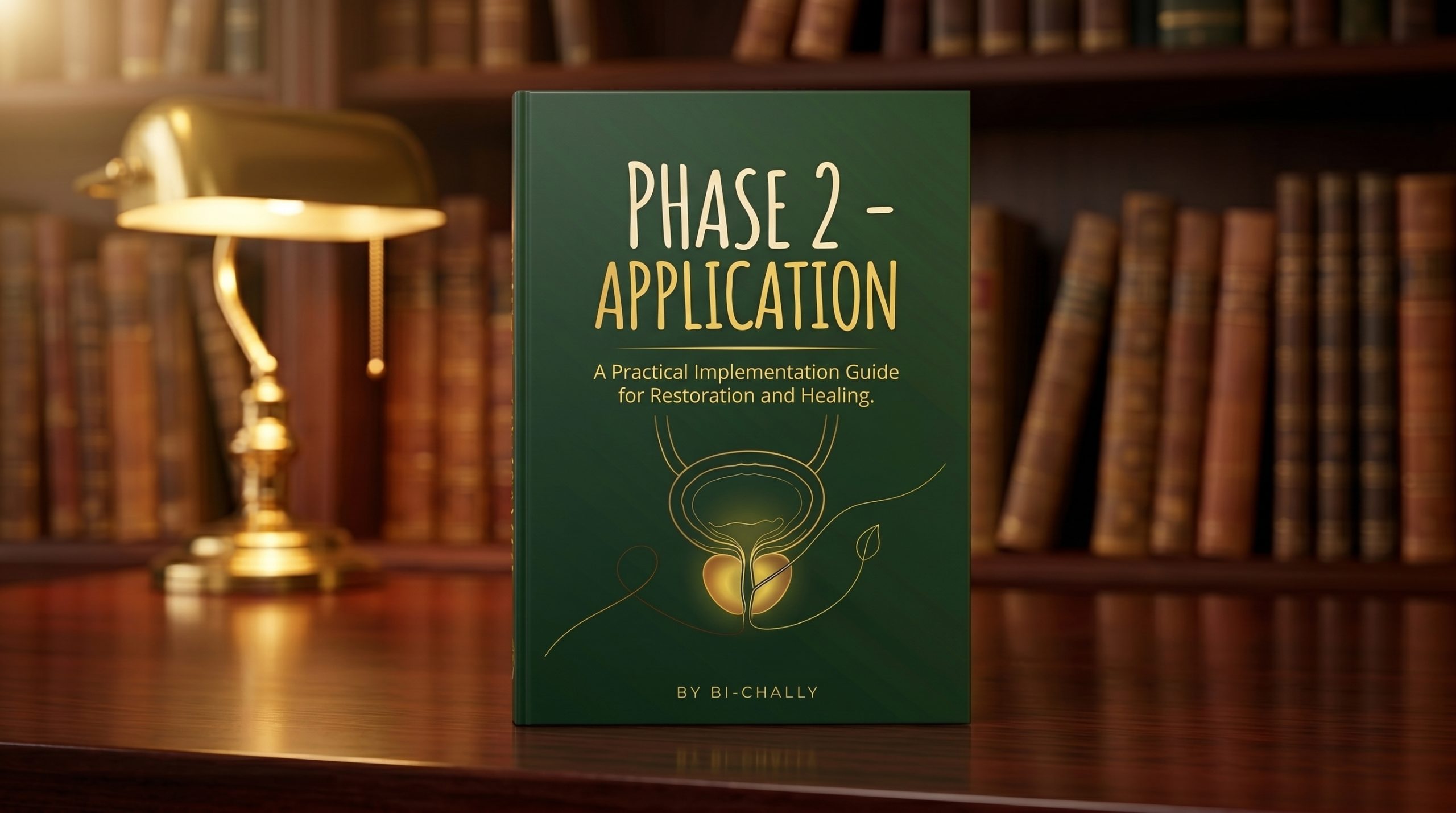
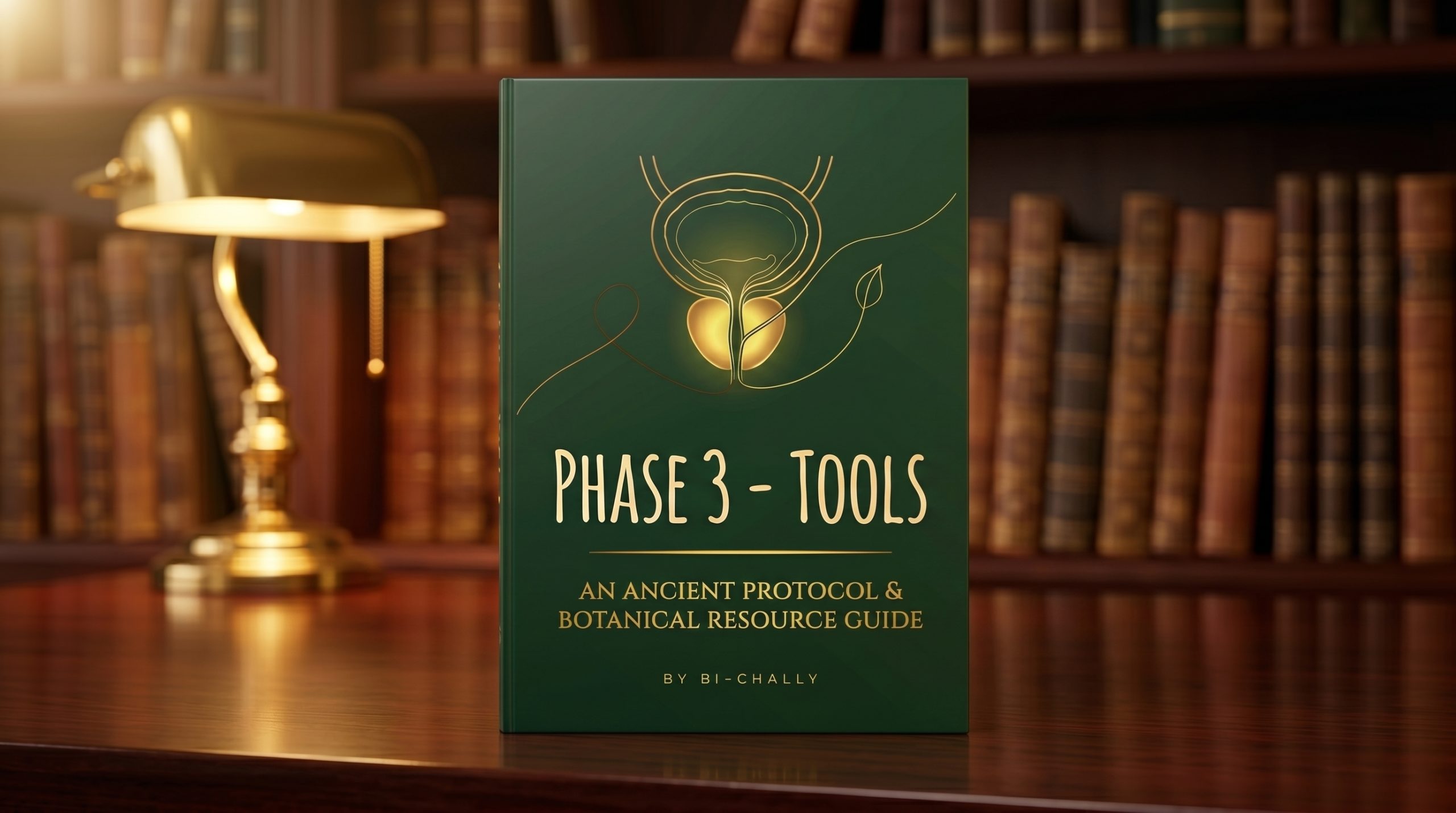
I put everything — the full protocol, the list of ingredients with their Ibibio and Efik names, the exact steps, the timing, what to avoid, how to know it is working — inside one simple guide that any Nigerian man can read on his phone, source the ingredients from his local market, and follow from day one without confusion.
The Ancient Ibibio Herbal Blueprint That Resets Prostate Inflammation, Ends Night Urination and Restores Every Nigerian Man's Strength and Vitality in 30 Days
And the best part? You do not need to visit a hospital. You do not need to buy expensive foreign supplements. You do not need to explain anything to your wife or your doctor or anyone else. It is the same simple protocol that worked for me, that worked for Uncle Etim, that has now worked for every man I have quietly shared it with.
"I live in London and I have been searching for something that understands the Nigerian man's body and budget. Everything here is either very expensive supplements or pharmaceutical drugs. My cousin sent me this guide. The shopping list with Ibibio and local names helped me find everything at a West African grocery store in Brixton. By week 3 my results were better than anything I tried in 5 years. I am recommending this to every Nigerian man I know over 45."
"I bought this for my father who was too ashamed to talk about his symptoms even to me. He is 61 and has been suffering for 3 years. He followed Phase 2 for 3 weeks and called me to say he slept through the full night for the first time in years. He is a man of very few words. When he said 'this thing is working', I knew it was working. The shopping list with Ibibio names made it so easy for him to source everything without confusion."
"I was skeptical. I have tried too many things. But the way this man explained the 4 root causes — I understood for the first time WHY everything else I tried did not work. That explanation alone was worth the N9,800. The protocol itself is structured and specific. Not vague like the other herbal things I wasted money on. I am in week 3 and my flow has improved significantly. My wife noticed something different about my mood and my energy before I even told her I was following anything."
"As a Nigerian man in Toronto, the diaspora angle in this guide is very real. Bi-Chally addresses exactly our situation — African grocery stores carry most of these herbs, the ones I could not find locally I ordered online from an African food store. I completed the full 30 days. My PSA levels were tested before and after. My urologist was surprised at the improvement. He asked what I had changed. I showed him the protocol. He looked at the herbs and said 'these are all scientifically supported.' Coming from a man with Ibibio roots writing for Nigerian men — this is exactly what our community needed."
Share Your Experience:
Just So You Know... Putting This Guide in an Easy-To-Read Format Cost Me Over N180,000.
Here is where that money went:
I am not going to charge you N180,000...
I will not even charge you N90,000...
Not even N50,000...
Not even N25,000 — which would still be fair...
For a limited time, your investment today is just:
Secure payment · Instant PDF delivery · Available in Nigeria and worldwide
This bonus is currently being prepared and will be added to your package automatically once available. All current buyers will receive it free when it launches.
A second powerful bonus is also being prepared. It will complement the main protocol directly and will be delivered automatically to all early buyers at no extra cost.
First 30 buyers only at this price · Secure checkout · Instant delivery
Secure payment · Instant PDF delivery · N9,800 only
Still feeling unsure? I totally understand. Which is why I am making you this promise:
Follow the Akwa Ibom Prostate Protocol exactly as written for a full 30 days. Take the herbs as instructed. Follow the dietary changes. Do the morning ritual. Complete the pelvic floor exercises daily.
If after 30 days of full, honest compliance you see no measurable improvement in your night urination frequency and your energy levels — contact me directly and I will refund every kobo you paid. No argument. No delay. No awkward questions.
I am confident making this promise because I have never seen this protocol fail a man who followed it fully and honestly. The only way to lose is to not try.
"Honest review from a 58 year old man in Abuja. I have been to two specialists. Spent over N120,000 on consultations and drugs over 18 months. Night urination was still 3 times minimum. My son sent me this guide. I was reluctant — I have been disappointed too many times. But N9,800 is nothing compared to what I already spent. By week 2, one trip per night. By week 3, sometimes zero. I cried. A grown man of 58 years. I actually cried. This is what the money I spent at the hospital could not do."
"I have been in Houston for 12 years. The healthcare here is excellent but expensive and they always want to give you a drug for everything. I wanted a natural solution rooted in African knowledge. This is exactly that. The African grocery stores here in Houston carry miracle leaf, bitter leaf, African walnut — I was surprised. Within 30 days I was a different man. My wife says I look 10 years younger. She is not wrong."
"Wetin sweet me pass for this guide na the structure. E no be like those vague herbal things wey dem dey sell for roadside. This one dey tell you exactly wetin to take, how to prepare am, when to take am, and wetin to expect every week. Week 1 — I begin notice the difference. Week 2 — my wife ask me why I dey look different. I no tell her anything. I just smile. By week 3 she say, 'Gbenga, wetin you dey do?' I show her the guide. She order one for her brother the same day."
"I am a retired civil servant, 63 years. I thought my situation was too far gone for any natural remedy to help. My prostate problem was severe — 4 to 5 trips per night, sometimes more. A church member shared this guide with me. After 3 weeks — 1 to 2 trips maximum. After 4 weeks — some nights, none at all. I have recommended this to 4 men in my church already. Two of them have already come back to thank me. The morning ritual card is what I have stuck on my bathroom mirror and I follow it every single morning without fail."
"I have been in Birmingham for 8 years. I went to my GP about my symptoms and he referred me to a urologist. The waiting list was 6 months. A Nigerian friend sent me this guide while I was waiting. By the time my urologist appointment came, my symptoms had reduced so significantly that he asked if I was sure I still wanted the appointment. The protocol works. The Ibibio and Efik knowledge in this guide is genuine — you can feel that this was written by someone who comes from this tradition, not someone who just read about it."
Get The Akwa Ibom Prostate Protocol today. Follow the 30-day system exactly as written. Make the One-Night Relief Tea tonight. Sleep differently tomorrow. And in 30 days, be the man who wakes up once — or not at all — and goes through his day with the energy and confidence he had before all of this started. Be the man his wife says is looking like himself again. Be the man who solved a problem that was silently destroying his quality of life — using the wisdom of his own people, from his own land, for less than the cost of one hospital consultation.
Close this page and keep waking up at 1am, 3am and 5am. Keep pretending it is not getting worse. Keep buying pharmacy drugs that treat the symptoms but never the root. Keep spending money on roadside herbal mixtures with no ingredients and no structure. Keep carrying this quietly and alone while it costs you your sleep, your energy, your confidence and your peace. Maybe tomorrow something better will appear. Maybe it will not. The clock is ticking either way.
The decision is yours. But God may have brought you to this page for a reason.
N9,800 only · Secure payment · Instant PDF delivery · 30-Day money-back guarantee
🔒 Your payment is 100% secure. You will receive your PDF immediately after payment.
© 2025 The Akwa Ibom Health Journal · Akwa Ibom State, Nigeria
This product is for educational and informational purposes only. It is not intended to diagnose, treat, cure or prevent any disease or medical condition. Always consult a qualified healthcare professional for serious medical conditions. Results described are typical of buyers who follow the protocol fully and consistently. Individual results may vary.
"I don dey wake up 3 to 4 times every night for almost 2 years. I buy drugs from pharmacy, nothing work. One of my people send me this protocol, I follow am exactly as Bi-Chally write. By day 3 the night urination reduce. By week 2 I begin sleep like person wey never get this problem. My wife say I look younger. I no fit explain wetin happen but e work. Simple as that."